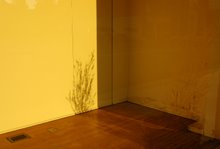
Air-Conditioner, Martinsville, VA
26 March 2009


22 March 2009
Every day I tell myself it's temporary
 Elvis Among Sparrows, Stuart, VA
Love the Wild Swan
--Robinson Jeffers
“I hate my verses, every line, every word.
Oh pale and brittle pencils ever to try
One grass-blade’s curve, or the throat of one bird
That clings to twig, ruffled against white sky.
Oh cracked and twilight mirrors ever to catch
One color, one glinting flash, of the splendor of things.
Unlucky hunter, Oh bullets of wax,
The lion beauty, the wild-swan wings, the storm of the wings.”
—This wild swan of a world is no hunter’s game.
Better bullets than yours would miss the white breast,
Better mirrors than yours would crack in the flame.
Does it matter whether you hate your...self? At least
Love your eyes that can see, your mind that can
Hear the music, the thunder of the wings. Love the wild swan.
Feeling the amber currents flowing from my mind


 3 photos taken whilst exploring the wino trails near peak creek.
 THE KOOL-AID WINO
--Richard Brautigan
When I was a child I had a friend who became a Kool-Aid wino as the result of a rupture. He was a member of a very large and poor German family. All the older children in the family had to work in the fields during the summer, picking beans for two-and-one-half cents a pound to keep the family going. Everyone worked except my friend who couldn’t because he was ruptured. There was no money for an operation. There wasn’t even enough money to buy him a truss. So he stayed home and became a Kool-Aid wino.
One morning in August I went over to his house. He was still in bed. He looked up at me from underneath a tattered revolution of old blankets. He had never slept under a sheet in his life.
“Did you bring the nickel you promised?” he asked.
“Yeah,” I said. “It’s here in my pocket.”
“Good.”
He hopped out of bed and he was already dressed. He had told me once that he never took off his clothes when he went to bed.
“Why bother?” he had said. “You’re only going to get up, anyway. Be prepared for it. You’re not fooling anyone by taking your clothes off when you go to bed.”
He went into the kitchen, stepping around the littlest children, whose wet diapers were in various stages of anarchy. He made his breakfast: a slice of homemade bread covered with Karo syrup and peanut butter.
“Let’s go,” he said.
We left the house with him still eating the sandwich. The store was three blocks away, on the other side of a field covered with heavy yellow grass. There were many pheasants in the field. Fat with summer they barely flew away when we came up to them.
“Hello, ” said the grocer. He was bald with a red birthmark on his head. The birthmark looked just like an old car parked on his head. He automatically reached for a package of grape Kool-Aid and put it on the counter.
“Five cents.”
“He’s got it, ” my friend said.
I reached into my pocket and gave the nickel to the grocer. He nodded and the old red car wobbled back and forth on the road as if the driver were having an epileptic seizure.
We left.
My friend led the way across the field. One of the pheasants didn’t even bother to fly. He ran across the field in front of us like a feathered pig. When we got back to my friend’s house the ceremony began. To him the making of Kool-Aid was a romance and a ceremony. It had to be performed in an exact manner and with dignity.
First he got a gallon jar and we went around to the side of the house where the water spigot thrust itself out of the ground like the finger of a saint, surrounded by a mud puddle.
He opened the Kool-Aid and dumped it into the jar. Putting the jar under the spigot, he turned the water on. The water spit, splashed and guzzled out of the spigot.
He was careful to see that the jar did not overflow and the precious Kool-Aid spill out onto the ground. When the jar was full he turned the water off with a sudden but delicate motion like a famous brain surgeon removing a disordered portion of the imagination. Then he screwed the lid tightly onto the top of the jar and gave it a good shake. The first part of the ceremony was over.
Like the inspired priest of an exotic cult, he had performed the first part of the ceremony well.
His mother came around the side of the house and said in a voice filled with sand and string, “When are you going to do the dishes? … Huh?”
“Soon, ” he said.
“Well, you better, ” she said.
When she left, it was as if she had never been there at all. The second part of the ceremony began with him carrying the jar very carefully to an abandoned chicken house in the back. “The dishes can wait, ” he said to me. Bertrand Russell could not have stated it better.
He opened the chicken house door and we went in. The place was littered with half-rotten comic books. They were like fruit under a tree. In the corner was an old mattress and beside the mattress were four quart jars. He took the gallon jar over to them, and filled them carefully not spilling a drop. He screwed their caps on tightly and was now ready for a day’s drinking.
You’re supposed to make only two quarts of Kool-Aid from a package, but he always made a gallon, so his Kool-Aid was a mere shadow of its desired potency. And you’re supposed to add a cup of sugar to every package of Kool-Aid, but he never put any sugar in his Kool-Aid because there wasn’t any sugar to put in it.
He created his own Kool-Aid reality and was able to illuminate himself by it.
19 March 2009
The ghost of electricity howls in the bones of her face.
 Donna, Pulaski, VA
 ABSENCES
--Donald Justice
It’s snowing this afternoon and there are no flowers.
There is only this sound of falling, quiet and remote,
Like the memory of scales descending the white keys
Of a childhood piano -- outside the window, palms!
And the heavy head of the cereus, inclining,
Soon to let down its white or yellow-white.
Now, only these poor snow-flowers in a heap,
Like the memory of a white dress cast down . . .
So much has fallen.
And I, who have listened for a step
All afternoon, hear it now, but already falling away,
Already in memory. And the terrible scales descending
On the silent piano; the snow; and the absent flowers abounding.
16 March 2009
there's no rhythm in your fall, there's nothing to dance to at all
 Untitled (Gym City Towing), Pulaski, VA
 --part 1 of CK Williams poem "The Foundation"
Watch me, I’m running, watch me, I’m dancing, I’m air;
the building I used to live in has been razed and I’m skipping,
hopping, two-footedly leaping across the blocks, bricks,
slabs of concrete, plaster, and other unnameable junk . . .
Or nameable, really, if you look at the wreckage closely . . .
Here, for instance, this shattered I-beam is the Bible,
and this chunk of mortar? Plato, the mortar of mind,
also in pieces, in pieces in me, anyway, in my mind . . .
Aristotle and Nietzsche, Freud and Camus and Buber,
and Christ, even, that year of reading “Paradise Lost,”
when I thought, Hell, why not? but that fractured, too . . .
Kierkegaard, Hegel, and Kant, and Goffman and Marx,
all heaped in the foundation, and I’ve sped through so often
that now I have it by heart, can run, dance, be air,
not think of the spew of intellectual dust I scuffed up
when in my barely broken-in boots I first clumped through
the sanctums of Buddhism, Taoism, Zen, and the Areopagite,
even, whose entire text I typed out—my god, why?—
I didn’t care, I just kept bumping my head on the lintels,
Einstein, the Gnostics, Kabbalah, Saint This and Saint That . . .
12 March 2009
like the absence that more and more crowds into my mind

11 March 2009
Nighttime's the right time to pull all the dimes from your pocket
 Weasel's Graffitti, Peak Creek Dam, Pulaski, VA
Friend and fellow photographer Bill Ratcliffe has a new photography webpage . Check it out. The "Ghost Town" series features decaying buildings around Pulaski--the first building in the series is one that I photographed quite a few times myself. Unfortunately, the town recently had it torn down, and now an empty lot has taken its place.
10 March 2009
sleep on your back, put ash in your shoes, and always use the old sense of the words
 Jake, Pulaski, VA
 I met Jake on an old railroad trestle in Pulaski. I was photographing the rust-covered supports and Peak Creek behind, trying to do something with the rust and the golden evening sunlight, but I wasn't really getting anything I was happy with. Just as I was about to leave, Jake came walking up the abandoned rails holding his skateboard in one hand and a Mt. Dew in the other. He looked like a nice enough guy, so I struck up a conversation with him and asked if I could take his photo in front of the creek. He said yes, and I took this photo and a few others. In general I don't feel like I handle portraits very well, but I'm happy with this one. I like eagle on the front of Jake's shirt, and the way his hair matches the golden brown of the sunlight hitting the trees in the background.
04 March 2009

Subscribe to:
Posts (Atom)